Focused Ultrasound Therapy (HIFU)
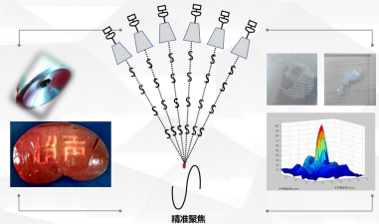
Focused ultrasound therapy (HIFU) is performed under medical imaging guidance, concentrating ultrasound waves on an internal target region to form a high–energy‑density focal point. The focal tissue temperature rises rapidly, producing coagulative necrosis within a very short time, while tissue outside the focus shows no obvious damage. By controlling the three‑dimensional movement of the focal point, conformal treatment of the entire target tissue is achieved.
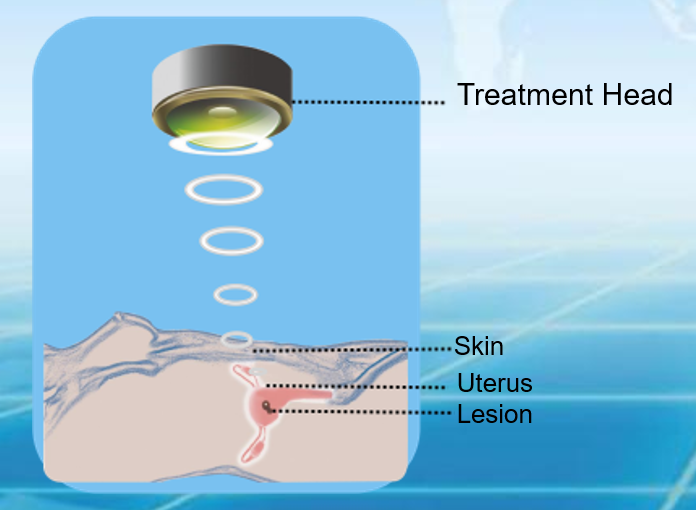
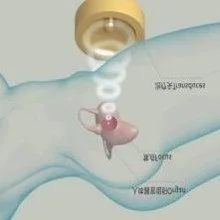
Focused ultrasound (HIFU) technology has been explored clinically in indications such as uterine fibroids, adenomyosis, benign prostatic hyperplasia, breast nodules, endometriosis, and scar pregnancy.
The HY2900 system is specifically designed and clinically configured for non-invasive, uterus‑preserving treatment of uterine fibroids and adenomyosis.
Why HY2900?
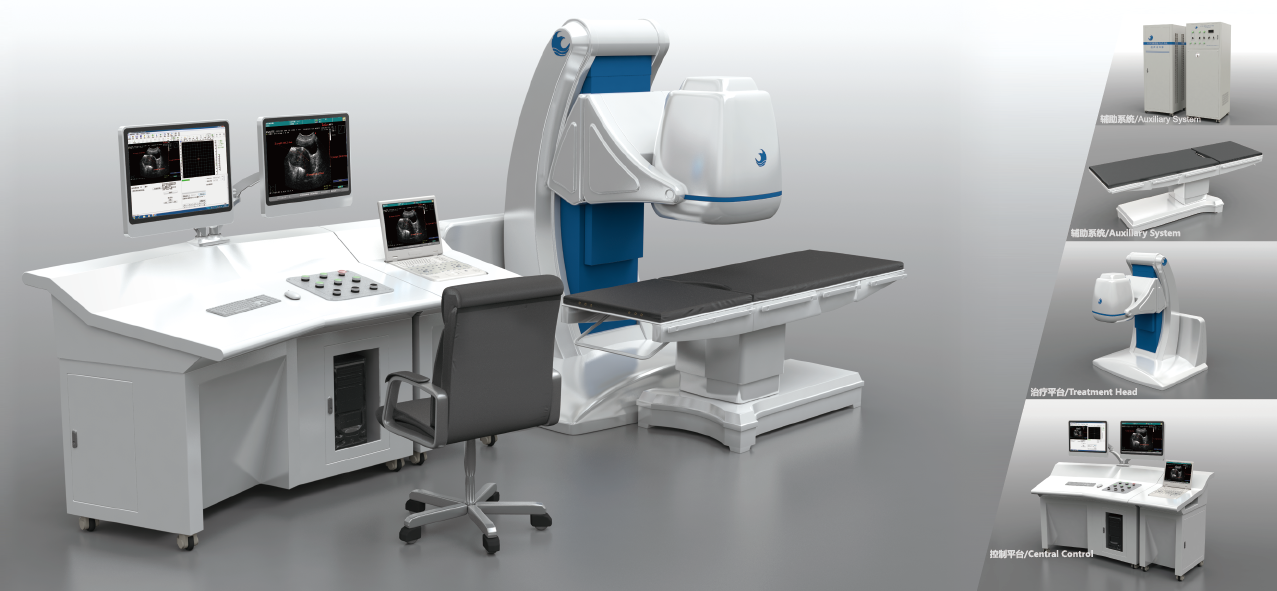
The HY2900 High Intensity Focused Ultrasound (HIFU) system is a non-invasive therapeutic platform for the treatment of uterine fibroids and adenomyosis.
Safe
No medical accidents have been reported to date in clinical use of the HY2900 system.
Patients can start planning pregnancy six months after treatment.
Treatment enables early intervention and supports women with future pregnancy plans, including those planning a second child.
Effective
Ablation with consequent coagulative necrosis was achieved in 100% of treated lesions.
At 6 months post‑treatment, 73% of tumors show a volume reduction of at least 50%.
Clinical symptoms improve effectively.
Treatment enables intervention before fibroids reach traditional surgical thresholds, reducing future need for hysterectomy or myomectomy.
Precise
Focal spot accuracy: 1.2 × 1.2 × 8 mm³
Five‑axis mechanical scanning accuracy: 0.1 mm.
Phased‑array technology.
Crown‑shaped treatment mode (proprietary technology)
Patient-friendly
No skin incision, no intraoperative bleeding and scarring.
Avoids many complications of open or laparoscopic surgery
Performed without general anesthesia
Continuous communication between physician and patient during the procedure
Treatment can be performed by a single physican/gynecologist.